Abstrakt dialog #299 Ole Kresten Finnemann Juhl
1/1 Unique · free choice of material at the same price · free insured shipping
Available sizes Lille · 25 × 25 cm DKK 1,200 Medium · 50 × 50 cm DKK 2,100 Stor · 75 × 75 cm DKK 3,500 X-stor · 100 × 100 cm DKK 5,400 XX-stor · 125 × 125 cm DKK 7,900 Enormt · 150 × 150 cm DKK 11,500 Gigant · 300 × 300 cm DKK 28,000
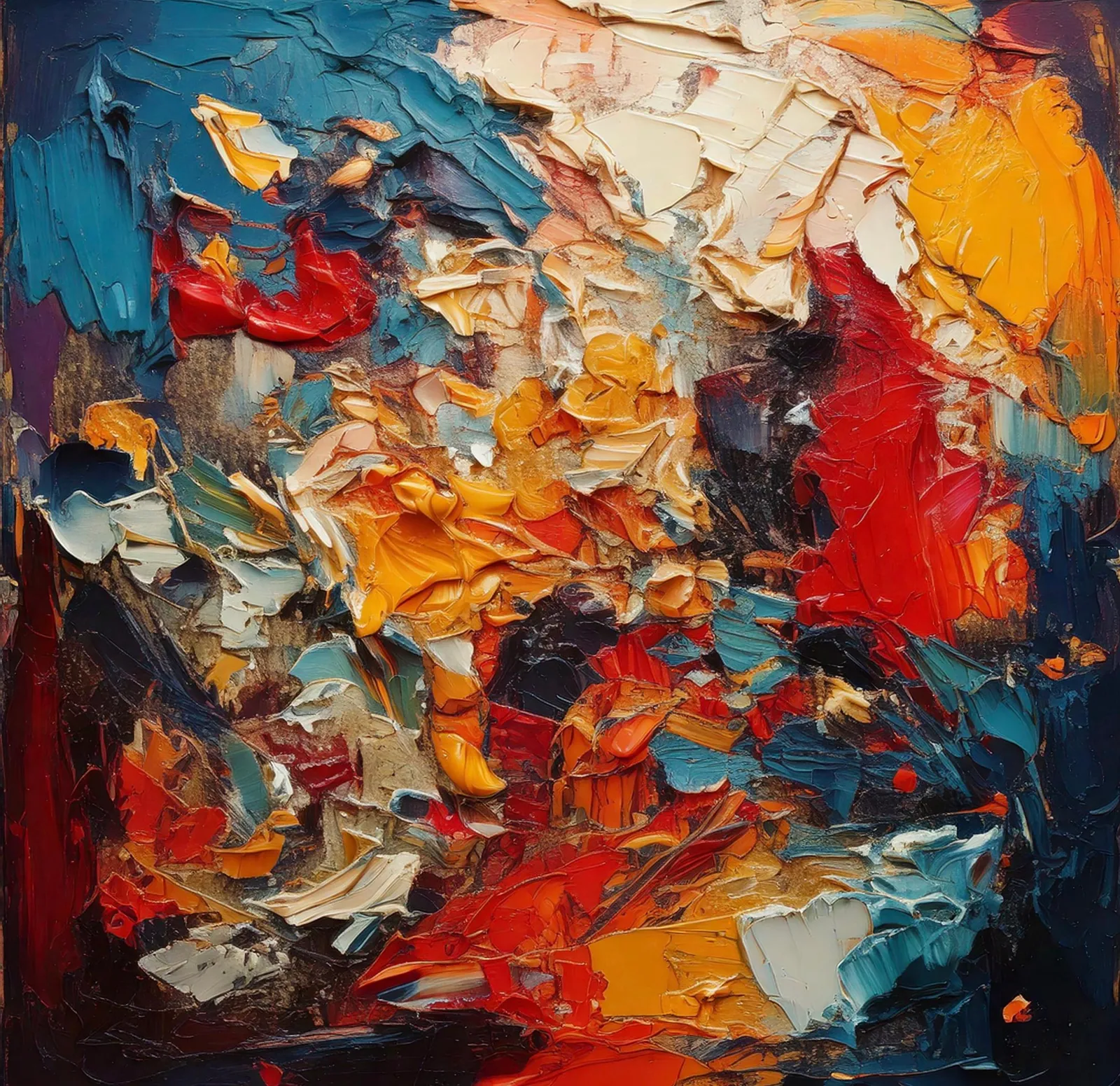
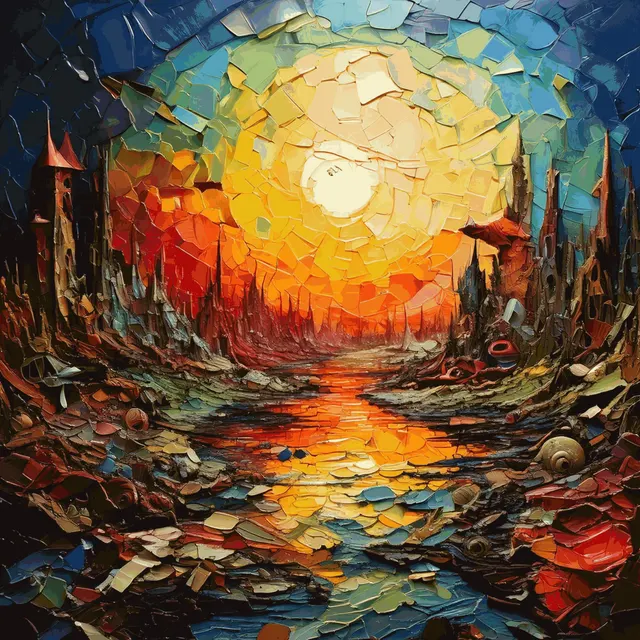
This is an abstract oil painting characterized by bold, textured strokes and vibrant colors. The composition has a dynamic blend of blue, red, yellow, white, black, and earthy tones, creating a lively and energetic visual effect. The thick application of paint and impasto technique adds depth and movement to the work.
This painting is a vivid example of abstract expressionism, a style that emerged in the mid-20th century and emphasized spontaneous, automatic, or subconscious creation.
Abstract expressionism is characterized by an emphasis on spontaneous, automatic, or subconscious expression. It often features bold brushwork, dynamic compositions, and a focus on the act of painting itself rather than depicting recognizable subjects.
The painting uses a vibrant and contrasting palette with dominant shades of red, yellow, blue, white, and black. The bold colors evoke strong emotional responses, typical of abstract expressionism.
The thick, textured strokes suggest the use of impasto, where paint is applied directly and forcefully, adding a physical character to the surface. The palette knife or thick brush techniques create a tactile, three-dimensional quality that invites the viewer to explore the surface.
The composition is highly dynamic without a clear focal point, which is common in abstract expressionism. Instead, the eye moves freely across the canvas, guided by the energetic brushstrokes and contrasting colors.
The intense, energetic application of paint combined with vibrant colors conveys emotions of energy, passion, and chaos. The style aims to evoke an emotional response rather than depict reality.
Abstract expressionism emerged in New York City in the 1940s and 1950s, influenced by surrealism, action painting, and European avant-garde movements. The movement prioritized individual expression and the act of painting itself, viewing the canvas as a space for personal and spontaneous emotion.
Abstract expressionism marked a shift in the art world, moving away from traditional representational art toward expressive, non-representational work. It emphasized the artist's personal emotional experience and the physical act of creating art, influencing subsequent movements such as minimalism and neo-expressionism.
Size 25 × 25 cm
Medium Giclée Fine Art-print (Xprint), frit valg af materiale
Edition 1/1 Unika Ask about this work A question about availability, shipping or a commission? Send Ole a message.